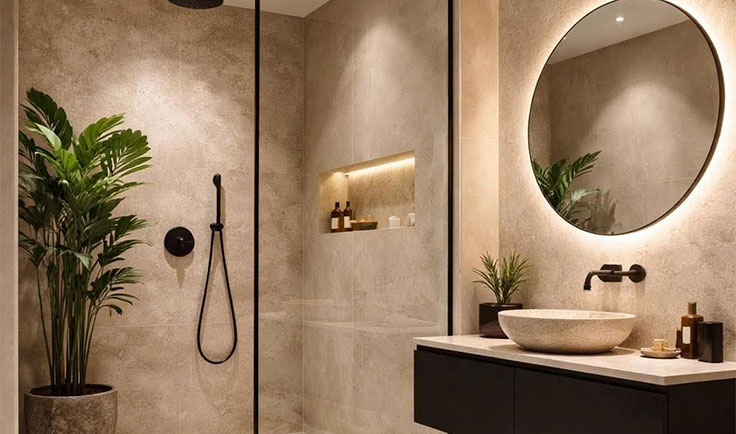
Decorative plaster in the bathroom: where to apply it and how to protect the finish
Decorative plaster in the bathroom has long since ceased to be an unusual choice. Today, it is one of the most popular ways to finish walls, and interior designers are increasingly using it in their projects. Whilst just a few years ago ceramic tiles were the undisputed favourite for bathroom design, today they are increasingly being combined with decorative finishes or even completely replaced by them on certain sections of the walls.
The popularity of this decision is completely clear. Decorative plaster allows creating a seamless coating, which looks modern and adds uniqueness to the interior, providing many options for design. A wide choice of textures, colors and decorative effects make possible to decorate a bathroom practically in every style – from minimalism and loft to classic or modern sophistication.
However, popularity raises many questions. Is it possible to use a decorative plaster in a bathroom? Can it resist moisture? What zones are good for application and what zones are better to skip? What protection to use for the coating is left beautiful and durable for years?
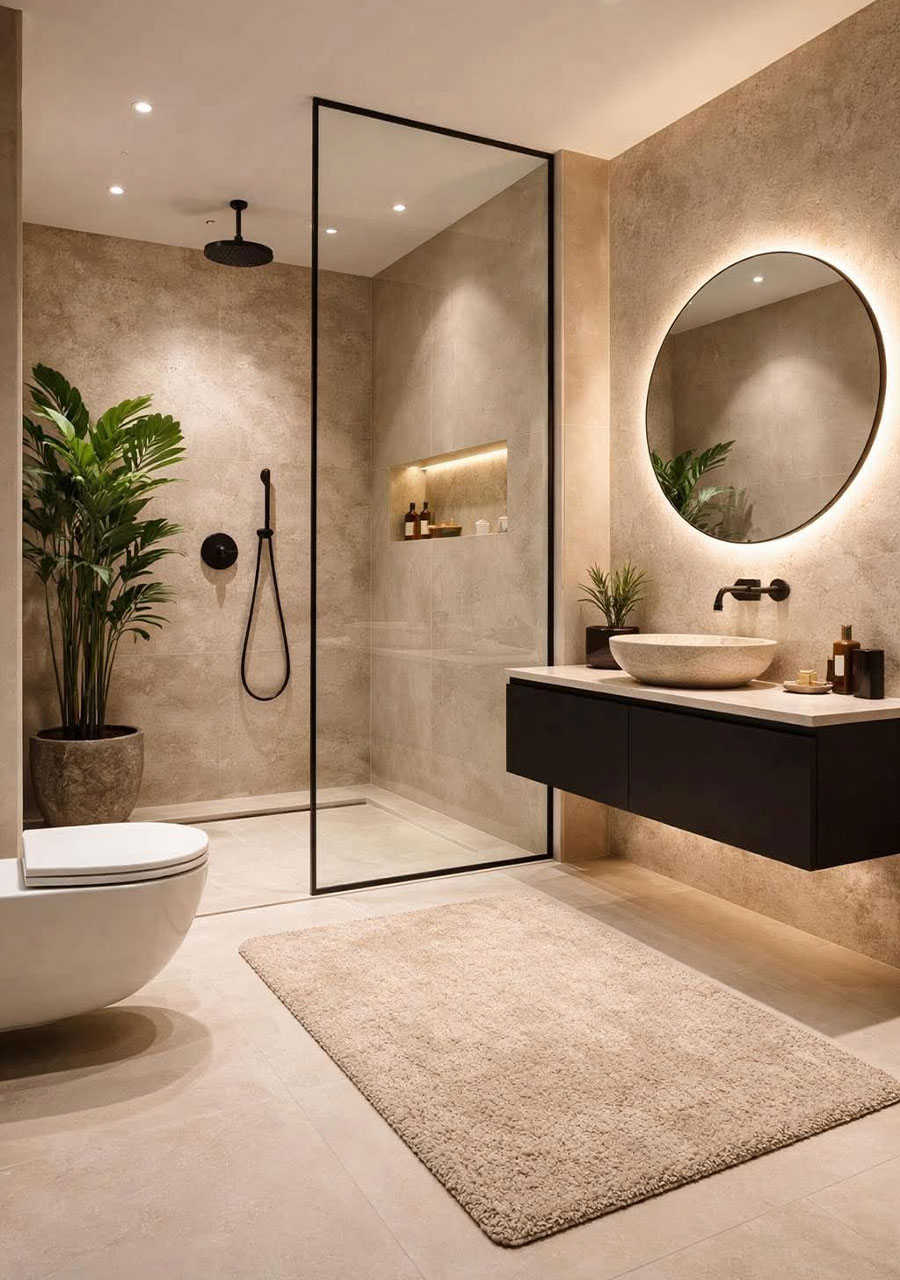
Let’s have a look at the pieces of advice concerning decorative products Maxima Decor: which coatings can be applied in a bathroom and which are better not to use there, which zones are better to avoid, then to protect the surface and look after the decoration. How recommendations from other manufacturers can differ depending on the product content and application technologies.
CAN I USE DECORATIVE PLASTER IN A BATHROOM?
Yes, decorative coatings Maxima Decor are intended for premises with high humidity and can be used in the bathroom if you follow the recommendations according to the zones of application and correct protection of the surface.
We recommend these decorative coatings for the bathroom: Marmorino, Travertino, Art Beton, Duna, Galaxy, Antico, and Microbeton. Any of these products has its decorative peculiarities, allows creating various patterns, and completes the interior harmoniously in every style.
The products we mentioned above create a hard, long-lasting, and vapor-permeable decorative coating, which perfectly resists humidity.
At the same time, you should remember that a bathroom has special conditions of exploitation. To make a decorative coating long-lasting and attractive for a long period, it is important to follow two basic recommendations:
- to choose correctly zones for decorative plaster application;
- to provide additional protection of the surface in the places, where it is necessary.
Information on which zones are acceptable for decorative plasters, where their use is not recommended, and which protection is the most effective is provided further on.
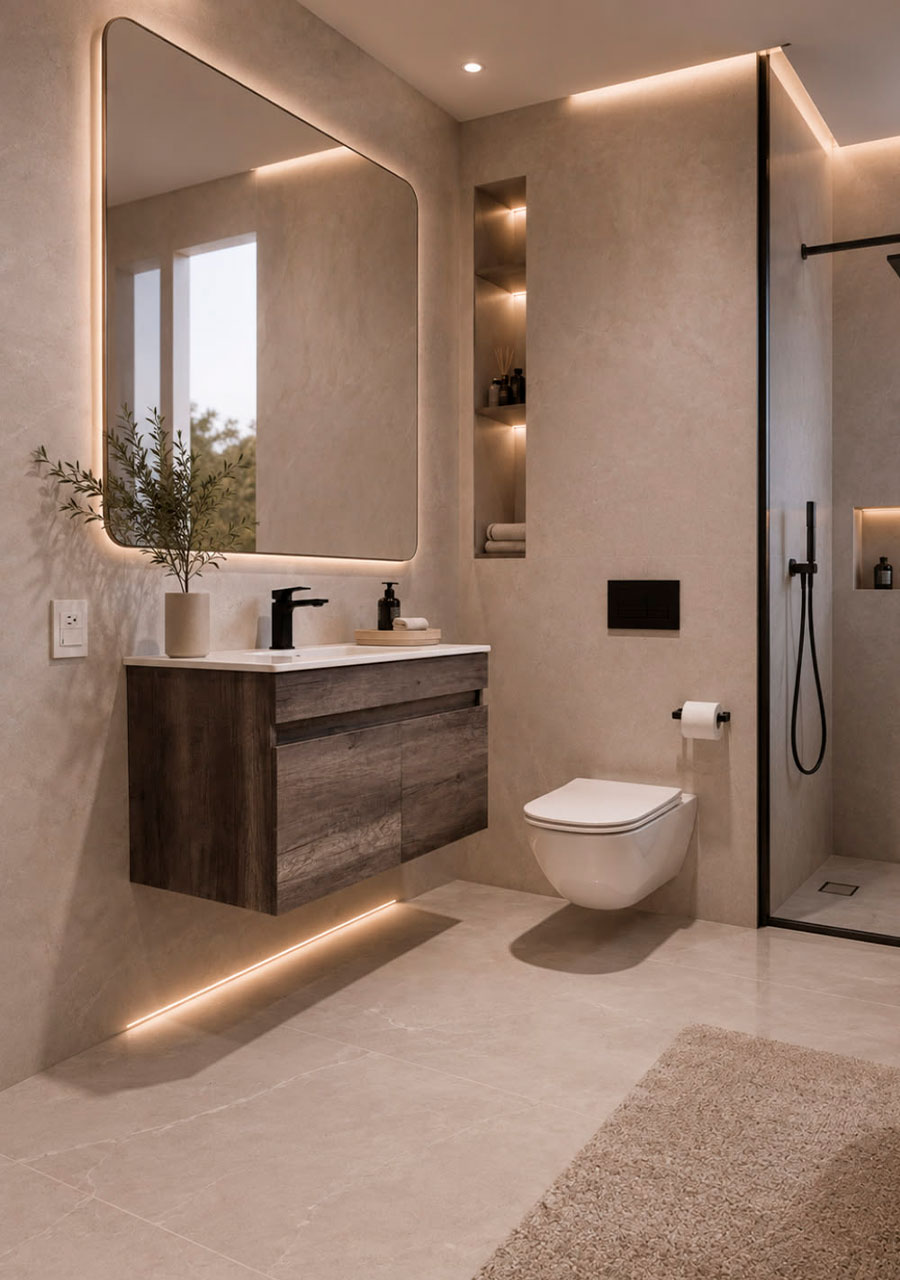
You should also take into account, that complete drying and final hardening of a decorative coating approximately takes 28 days after application. During this period we recommend keep the premise as dry as possible to let the coating drying completely. If possible, we recommend providing an appropriate ventilation and airing of the bathroom.
WHERE CAN I APPLY DECORATIVE PLASTER IN A BATHROOM?
You can apply decorative plaster Maxima Decor on all surfaces in a bathroom, where there is no direct contact with water. Right in these conditions the decorative coating shows all its advantages: keeps attractiveness, stays hard, long-lasting and doesn’t lose its exploitation properties.
We refer to the zones suitable for decorative plasters:
- dry walls in a bathroom;
- a ceiling (optionally);
- decorative niches;
- the walls opposite a bath or a shower;
- other surfaces, which be directly affected by water.
We think that the best decision for a bathroom is a combination of various decorative products. Nowadays, this approach is more often used for interior design. Decorative plaster is perfectly combined with ceramic tile, big panels of ceramic granite, decorative panels, and other water-resistant products.
Optimal option is to use decorative plasters on those surfaces, where there is no direct contact with water and for the zone with constant water contact – near the sink, in the shower – we propose to use ceramic tile, ceramic granite or other products intended for these terms of exploitation.
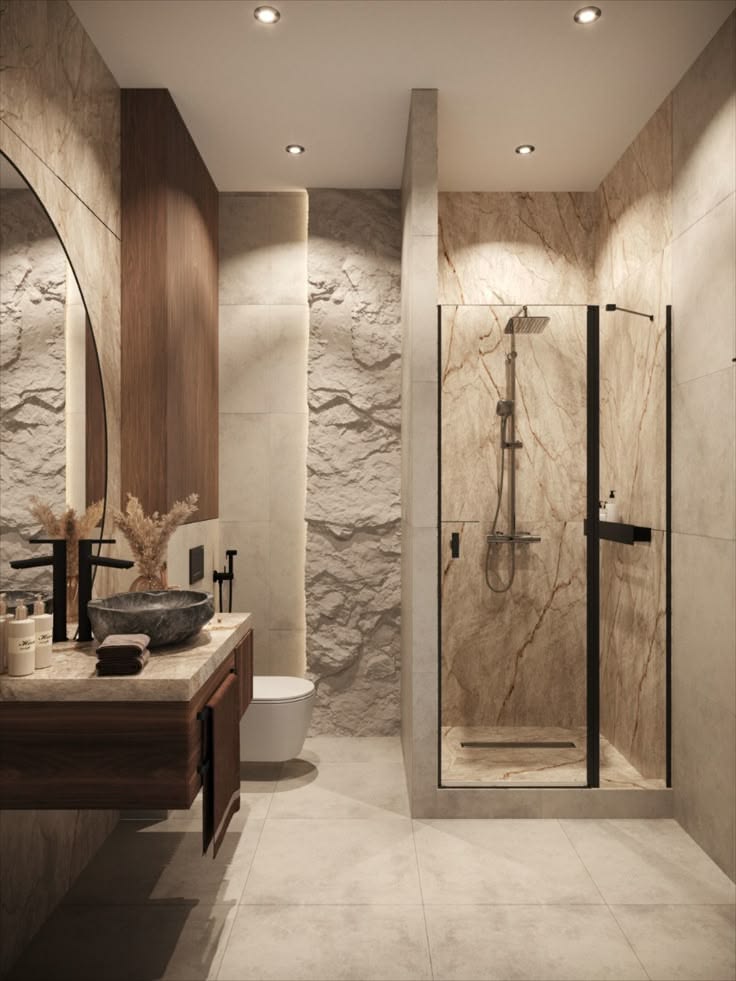
Optimal option is to use decorative plasters on those surfaces, where there is no direct contact with water and for the zone with constant water contact – near the sink, in the shower – we propose to use ceramic tile, ceramic granite or other products intended for these terms of exploitation.
This combination allows for receiving not only a stylish and modern interior but also provides maximal long-lasting decoration.
WHERE IS IT FORBIDDEN TO APPLY DECORATIVE PLASTER IN A BATHROOM?
In spite of decorative coatings, Maxima Decor perfectly withstands high humidity conditions; there are zones where we do not recommend using them. We speak about the surfaces, which constantly in contact with water or regularly are effected with water.
To these zones belong:
- Shower zone – the place, where the walls are constantly affected with plenty of water under the pressure.
- The wall near the sink – during everyday use the splashes of water regularly reach the surface.
- All other zones with direct and constant contact with water, for example walls above the bath or at the water tap.
It is important to understand that the reason for these restrictions is not that the decorative plaster is afraid of moisture, but that the direct impact of water creates much more difficult conditions than usual air humidity. Constant impact of water, especially under pressure, can negatively affect even a protective layer on a decorative coating.
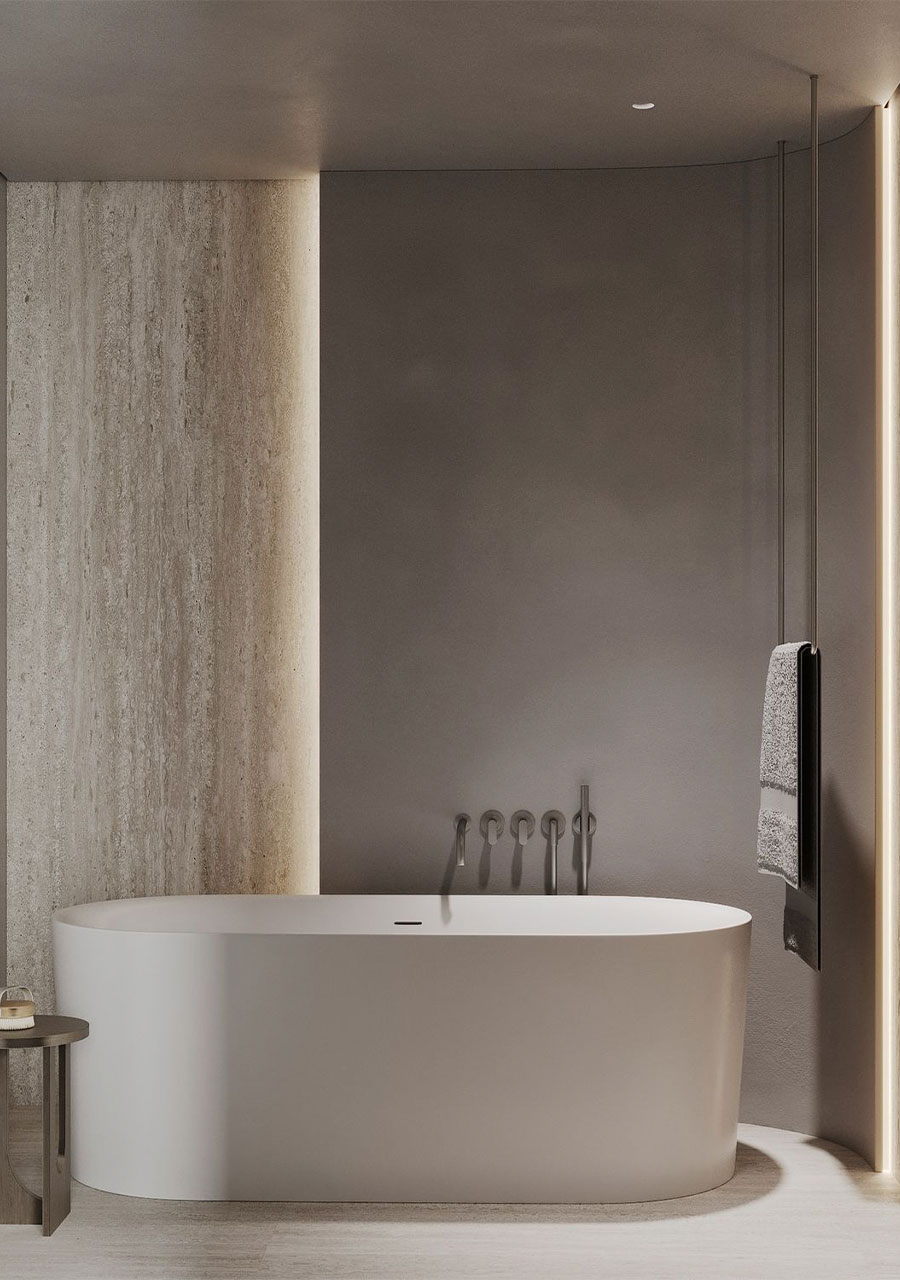
In this case, it is appropriate to use decorative plaster only in zones where constant contact with water is absent. For the shower zone, the area near the sink, or the area at the bath, use materials intended for these conditions, for example, ceramic tile or ceramic granite.
Varnish or wax: What is the best way to protect decorative plaster in a bathroom?
One of the most frequent questions, which we receive: if it is enough to coat decorative plaster with wax or varnish to use it in even in shower zone?
Unfortunately, there is no definite “yes”. Let’s find out why.
IS WAX SUITABLE FOR PROTECTION OF DECORATIVE PLASTER IN A BATHROOM?
You can use as wax so varnish for the protection of decorative plaster Maxima Decor. Both of these products create an additional protective layer on the surface of the coating, making care easier and increasing its lifespan.
Decorative wax obtains water-repellent properties, emphasizes the texture of the coating, and provides a more expressive decorative effect.
Due to its properties it becomes popular finishing coating for many kinds of decorative plasters.
However if we speak right about bathroom, we prefer to recommend water-based acrylic Panel Varnish Maxima. During the exploitation the varnish shows high resistance to moisture effect, better protects the surface against routine loading and make taking care after the decorative coating easier.
Acrylic varnish carries out several important functions:
- it creates an additional protective layer on the surface;
- it increases durability of decorative plaster;
- it makes looking after the walls easier;
- it simplifies cleaning the surface from everyday contaminations.
We recommend using acrylic varnish for decorative coating in a bathroom as the most practical decision for daily exploitation.
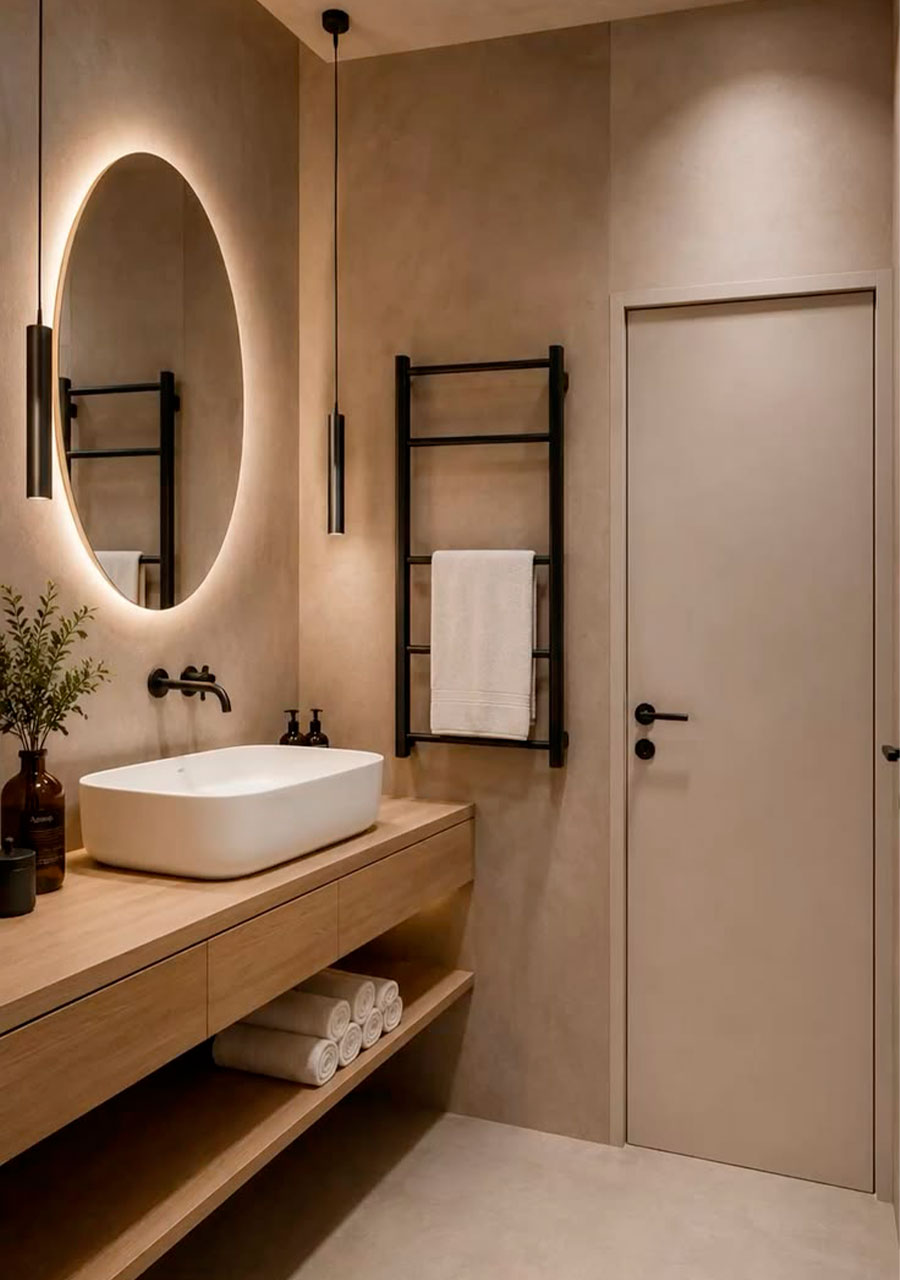
WHY CAN I SEE A DECORATIVE PLASTER EVEN IN THE SHOWER BOX?
In modern design projects, you can see decorative plaster even in shower zones. It is explained by the fact that they use special protective systems for these decisions, which provide improved coating resistance to constant water impact.
For example, certain craftsmen use auto varnishes or professional two-component varnishes, which have significantly higher water resistance than usual finishing coatings.
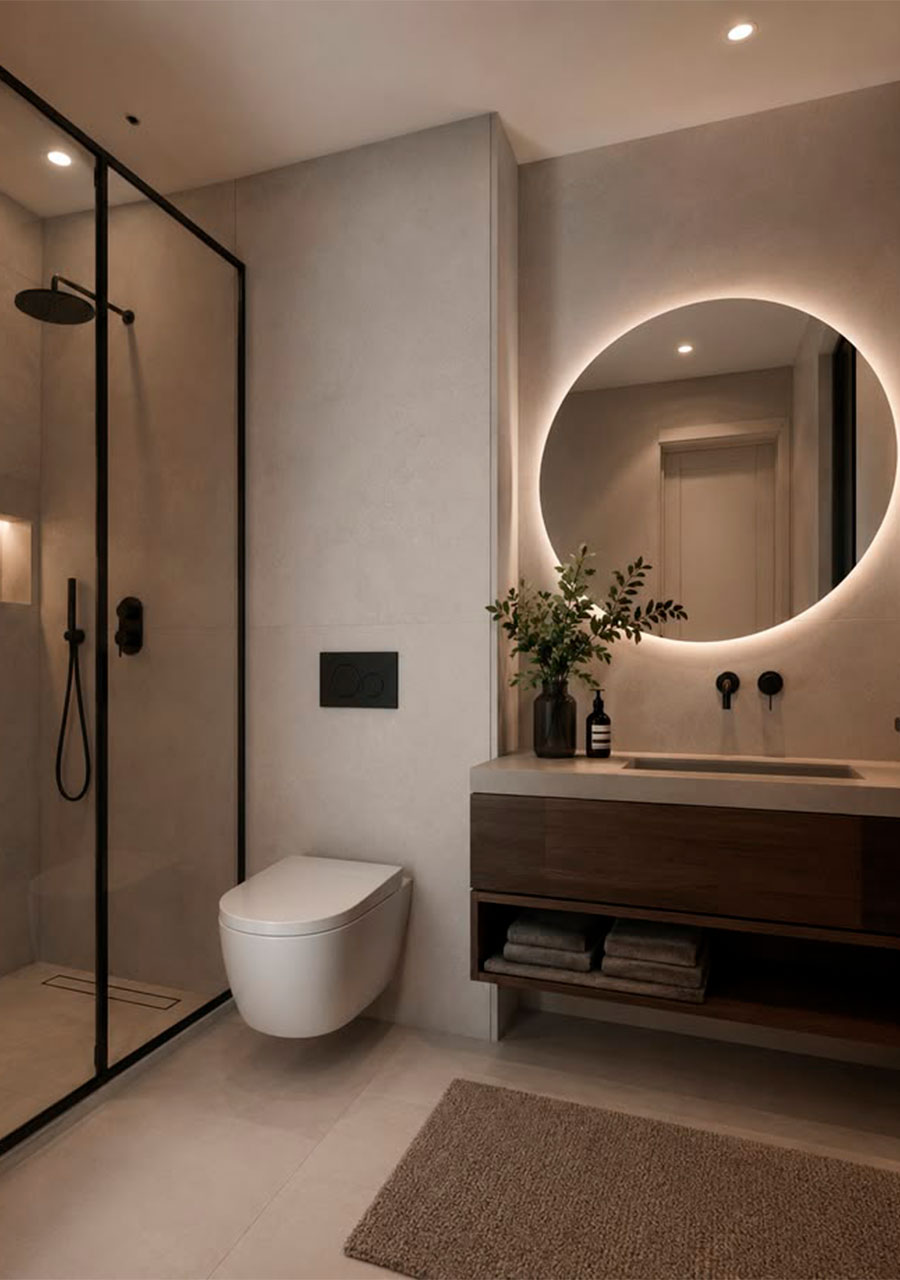
It the same time, Maxima Decor doesn’t use these products for its decorative coating system, and it can’t guarantee a positive result or a long-lasting effect of the coating after their combination with the brand's products. To achieve the expected result, it is important to follow technologies of application and use only products from Maxima Decor.
Decorative plaster in a bathroom is a modern and practical decision, which allow creating stylish, seamless and long-lasting interior. The main thing is to determine correctly zones for its intension and follow recommendations for its application and protection.
As a manufacturer, we can guarantee the quality and long life of the decorative coatings only if you follow recommendations of technology of application and using of the products, which are included in Maxima Decor system.
In conclusion, our recommendation remains unchanged: use decorative plaster in those zones of a bathroom where constant contact with water is absent, and for shower zones, use the products that are specially designed for such exploitation conditions.
- 08.09.2026